
Introduction to Kata Shokan-Te
Originally created by Kancho Robert Sullivan in the early 2000s as a kata for himself, Shokan-te is now part of the GKR syllabus. The kata’s name is a direct reflection of it being Kancho’s first kata that he has created Sho (first) Kan (Kancho) Te (hand).
While training at home after a session with senior students, Kancho started working on some techniques, combinations and movements when he realised a kata was forming. Having created 80-90% of the kata that day, he then set about finishing it the following day, making sure that it finished in the same position that it started.
The first move in Shokan-te is a step back and block which is consistent with Kancho placing defence as a higher priority over offence in kata and in karate as a whole. Each group of techniques in the kata reflects combinations that Kancho has used in kumite or drills and that have proved effective.
Once the kata was complete, Kancho could see that if this kata was adopted and trained consistently it would be something of value. With a broad range of techniques used in Shokan-te, regular practise would ensure that students were training their foundation techniques with the benefit of multiple combinations.
Based on Kancho’s fighting style, Shokan-te follows a diamond shape embusen and utilises practical movements and combinations that can be transferred across to kumite and self-defence situations.
What started off as a personal kata for Kancho, Shokan-te, along with Nikan-te and Sankan-te, have now been formalised and included in the GKR Syllabus for 5th Dan and above gradings.
GKR Karate – Shokan-Te
Tips for Shokan-te
Count 1: Juji Uke (X-Block)
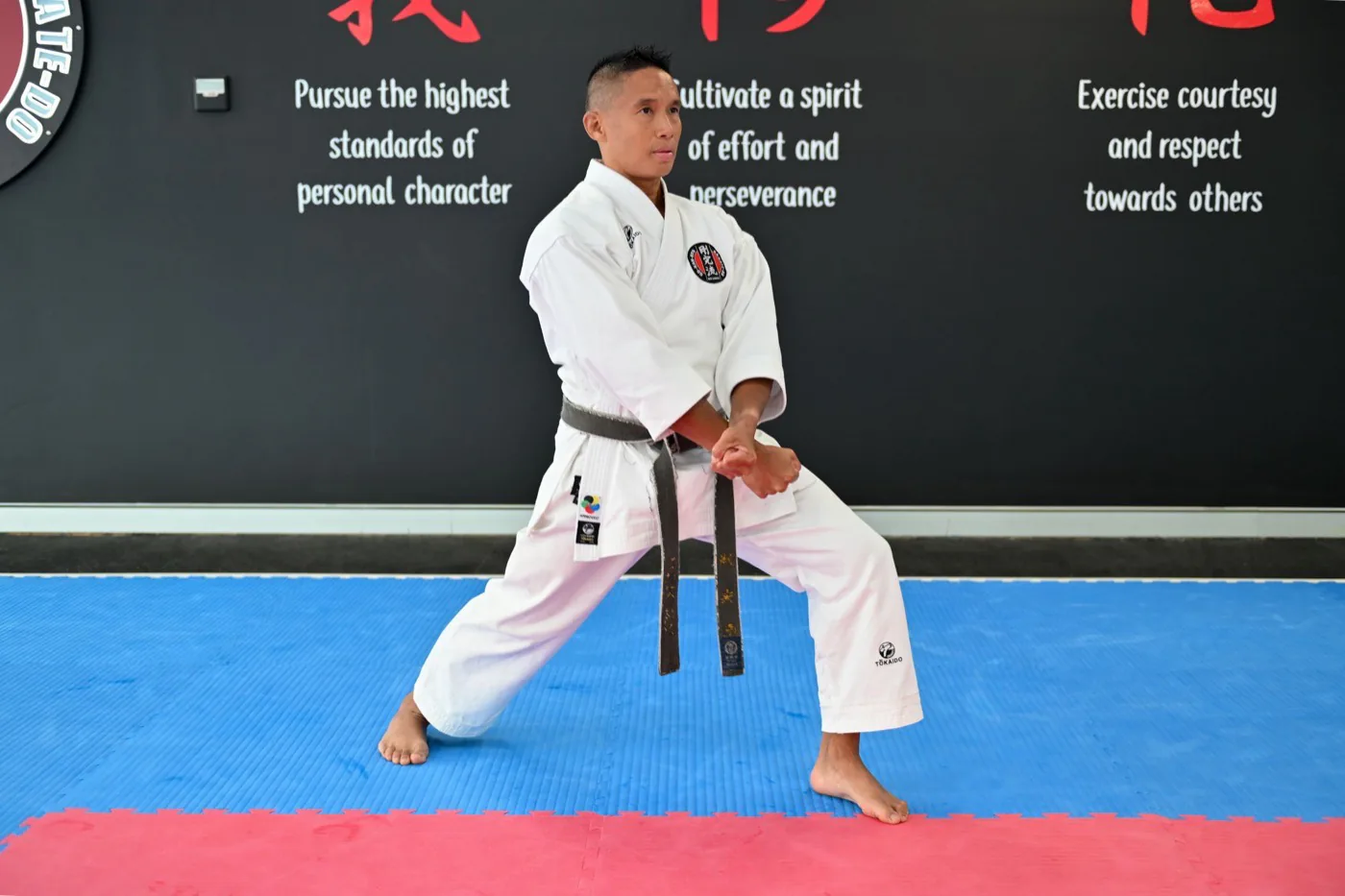
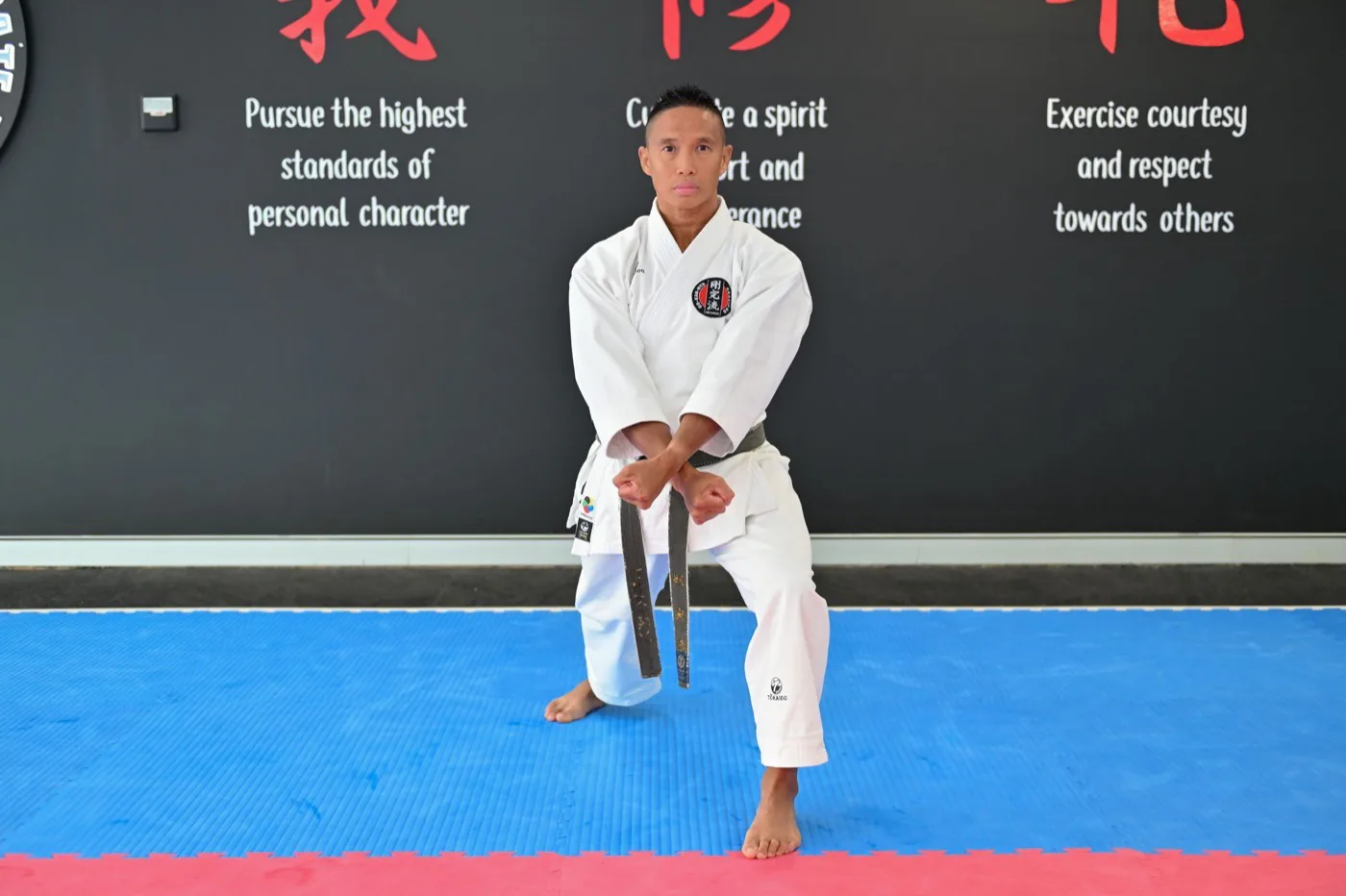
- Hands prepare at Hikite position and make gedan level Juji uke (X-block)
- Fists should be far enough apart to allow an opponent’s shin bone to fit between
- Left hand is on top (similar to “Yoi” when bowing into kata)
- Fists are below the belt (gedan level)
- Right leg steps back on a 45-degree angle
- Block finishes at the same time as the stance
Count 3: Inverted Haito Uchi
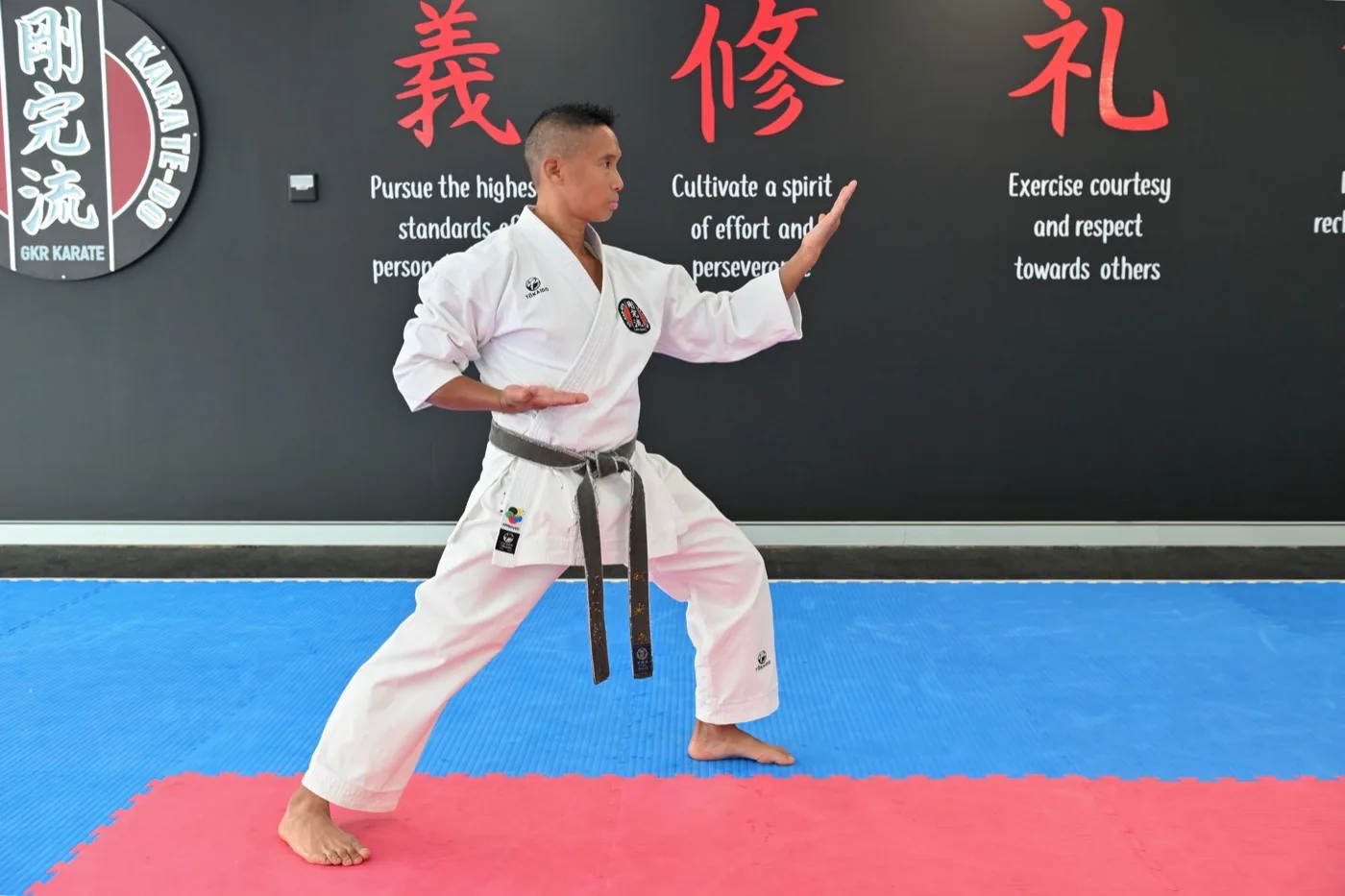
- Unlike a regular Haito, the arm is bent on the inverted Haito uchi
- Inverted Haito strikes up under the side of the jaw
- The wrist should be straight (unlike an outside Shuto)
- The thumb is still pulled in over the palm
- Hips are 45 degrees
- Hikite hand is open and the palm up
Count 6: Simultaneous Jodan-Chudan Tsuki
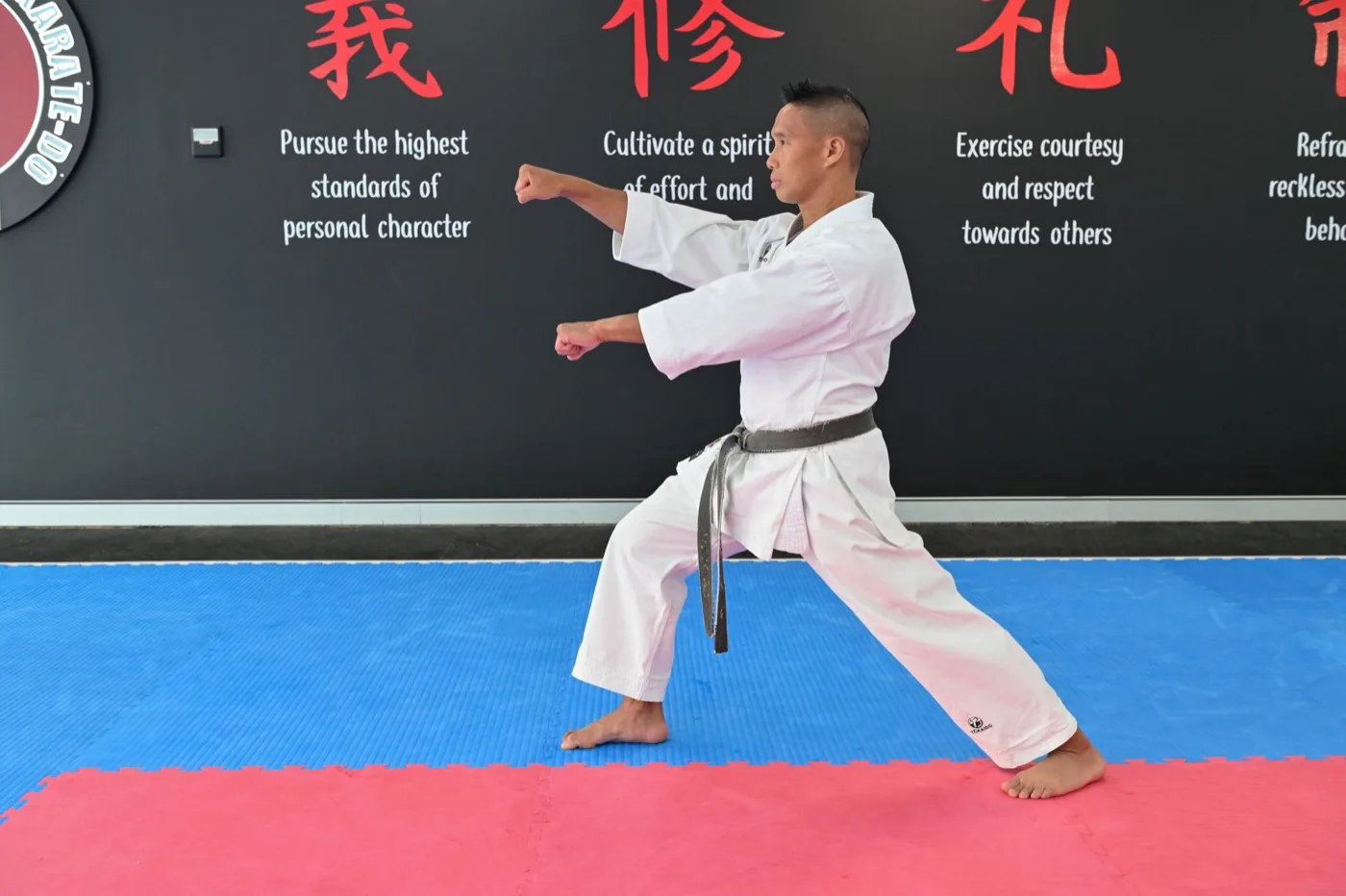
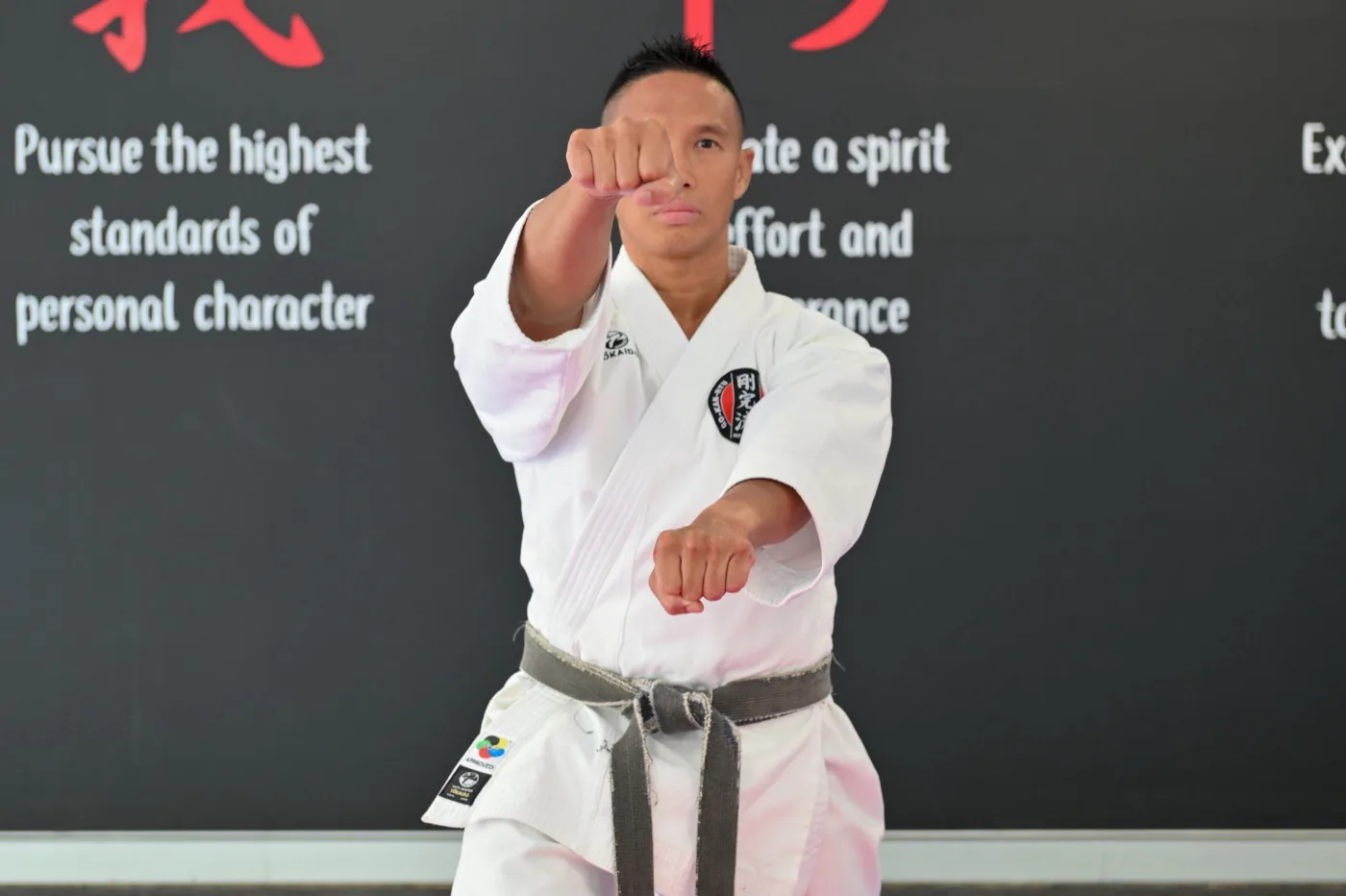
- Both punches land with the stance
- Hips are square
- Right hand is jodan level, left arm is chudan level.
- Both punches are aimed to the centre. Note: Only the fore knuckle aims to strike the centre, so only the two fore knuckles are one below the other
- The left arm is a regular Chudan tsuki, not to be confused with Awase tsuki (U-shape punch found in Bassai-dai).
Count 8: Spinning Tetsui Uchi (Hammer Fist)
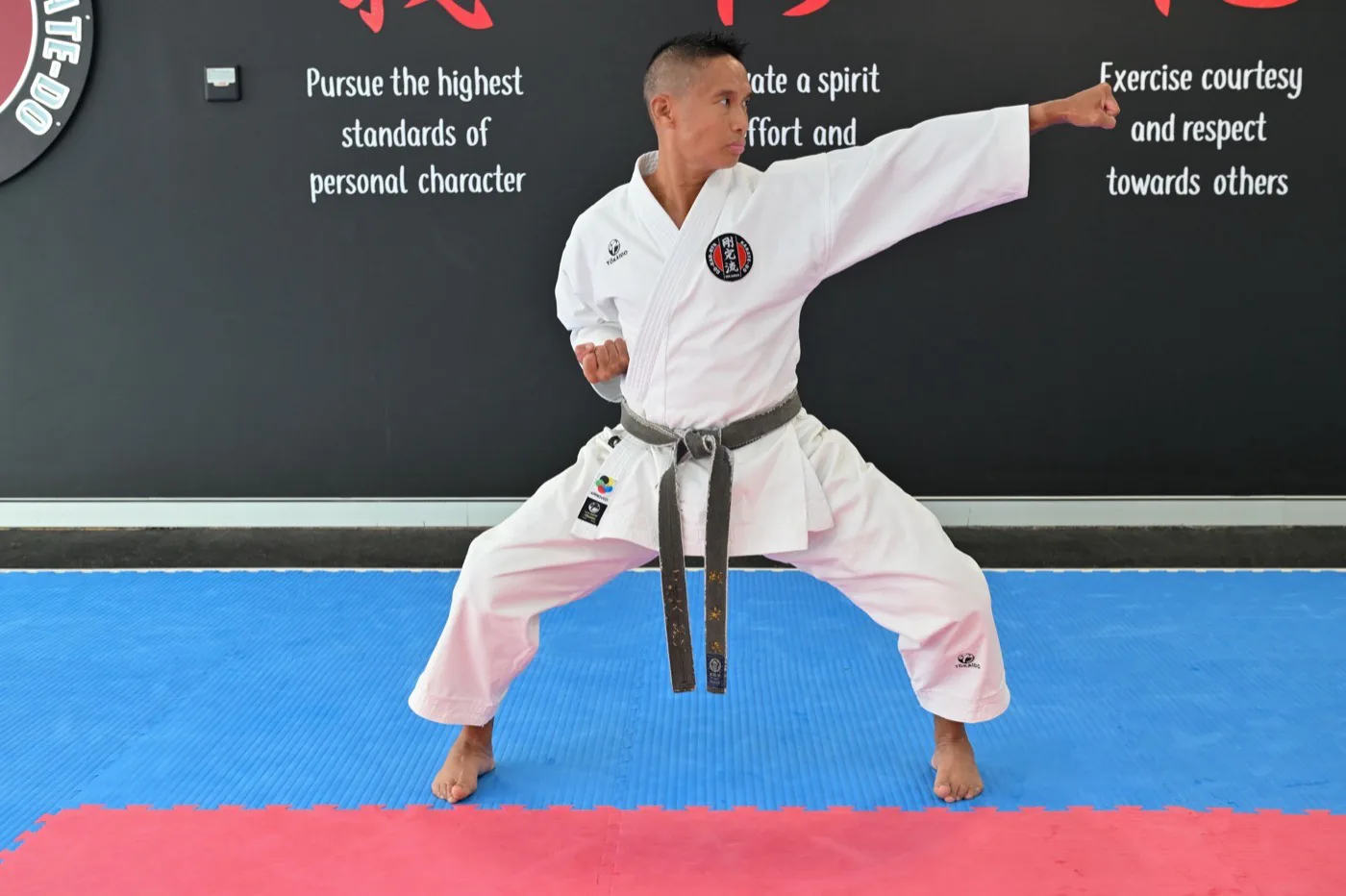
- To spin, pivot on your right foot as the left foot moves around behind.
- Land in Kiba dachi
- The angle of Kiba dachi should match the same angle as the previous technique
- Tetsui uchi (Hammer fist) is head height
- Hikite is closed in the traditional position
Counts 10 and 13: Mae Geri (Front Kick)
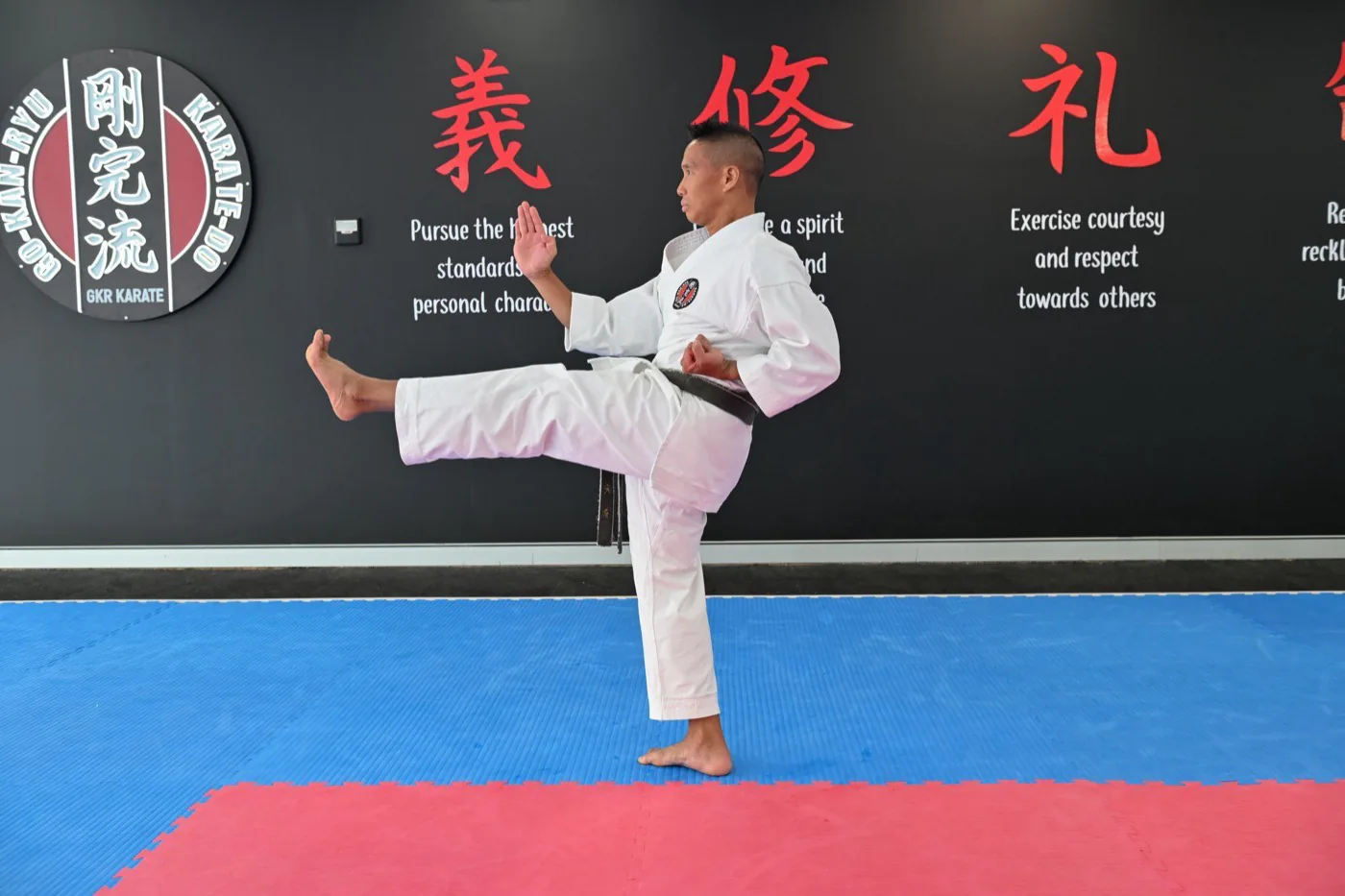
- Front kick is Chudan level with the toes pulled back.
- The torso’s posture should remain upright and avoid “turtling up”
- The Hikite pulls back to its traditional position the moment you commence the Mae Geri.
- The opposite hand pulls up in front like an open hand guard
- The hands remain in this clean position until it is time to start punching
Count 14: Yoko Geri (Side Kick)
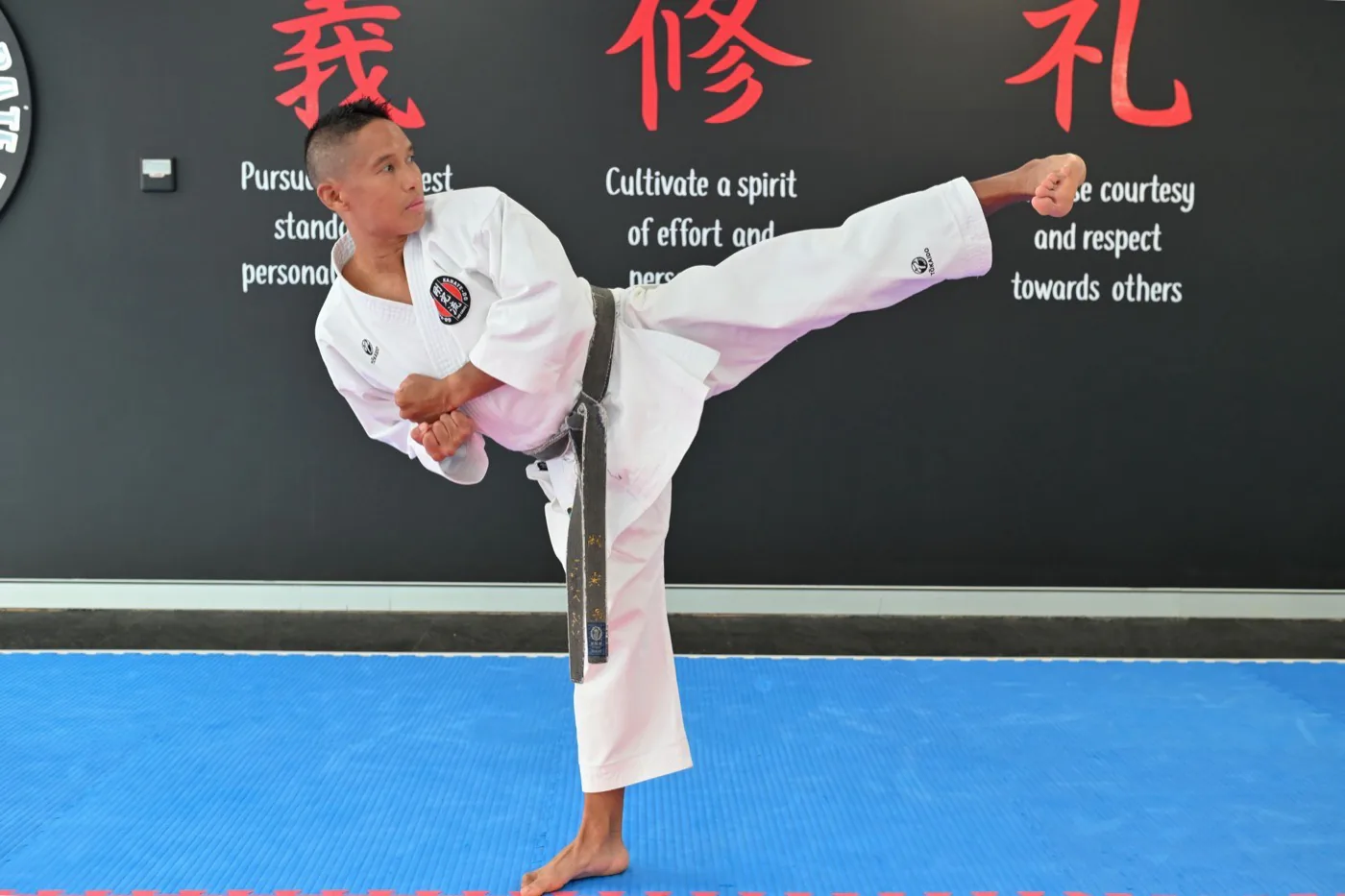
- There is no specific rule for the height of the side kick.
- The foot kicking should be correctly shaped for side kick
- Base leg should be slightly bent and the base foot turned away from the target
- Hands in a Koshi Gamae (hip guard) position with the left hand on top
- Upper body should avoid collapsing forward so the shoulders are in line with the hips and knees.
Count 15: Grab, Pull and Mawashi Empi
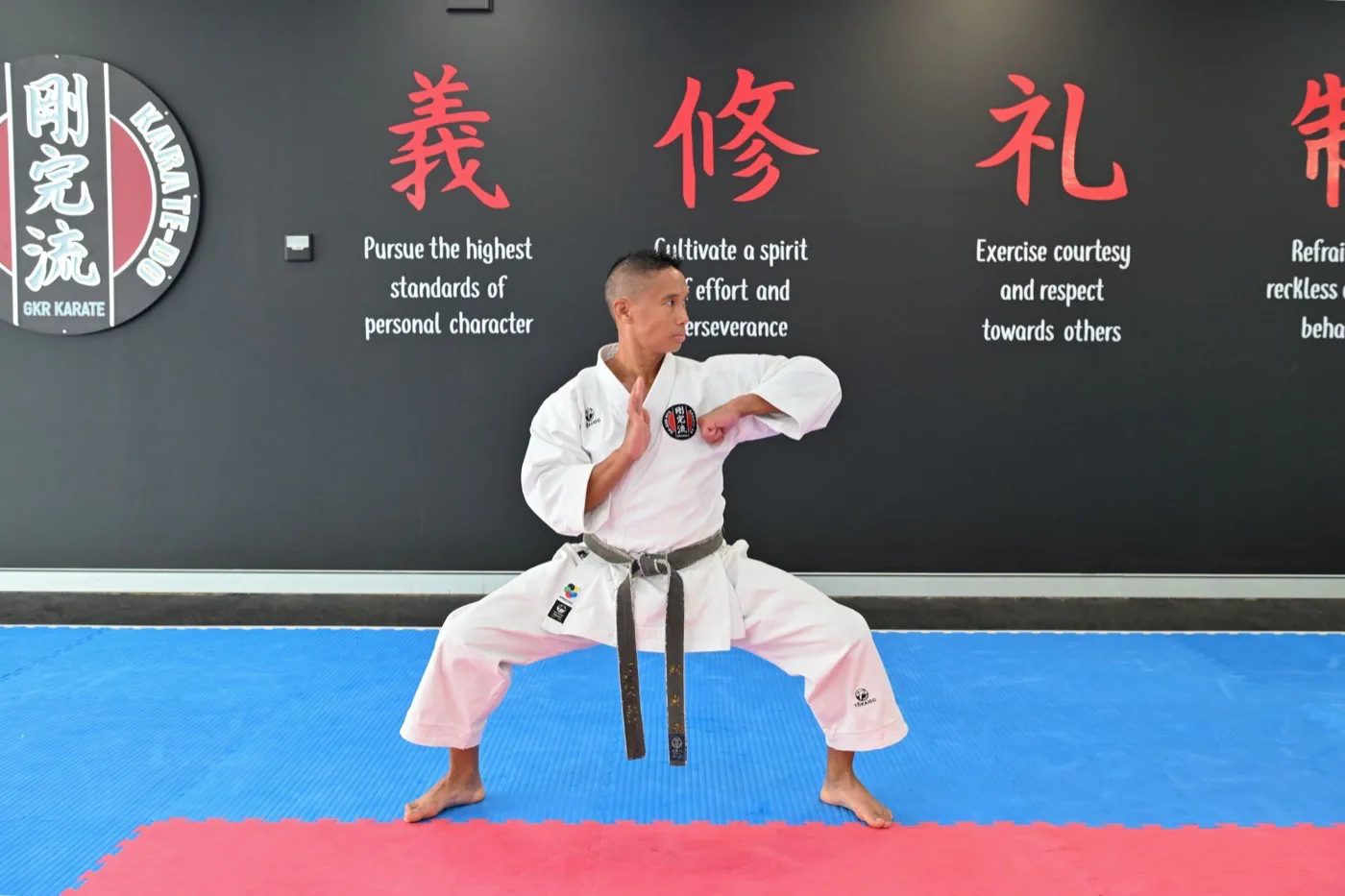
- While our Kata instructional video shows this technique performed two different ways, the posture in this photo is the way Kancho Robert Sullivan prefers.
- Right foot slides across from Zenkutsu dachi to make Shiko dachi
- Hand positions are identical to count 8 in Sepai
- Elbow is shoulder height or slightly above
- Hikite is centred with the palm forward and finger up
- Remain looking to the front (from the previous count)
- Kiai as you execute the Mawashi Empi
Counts 20 and 21: Yoko Tsuki
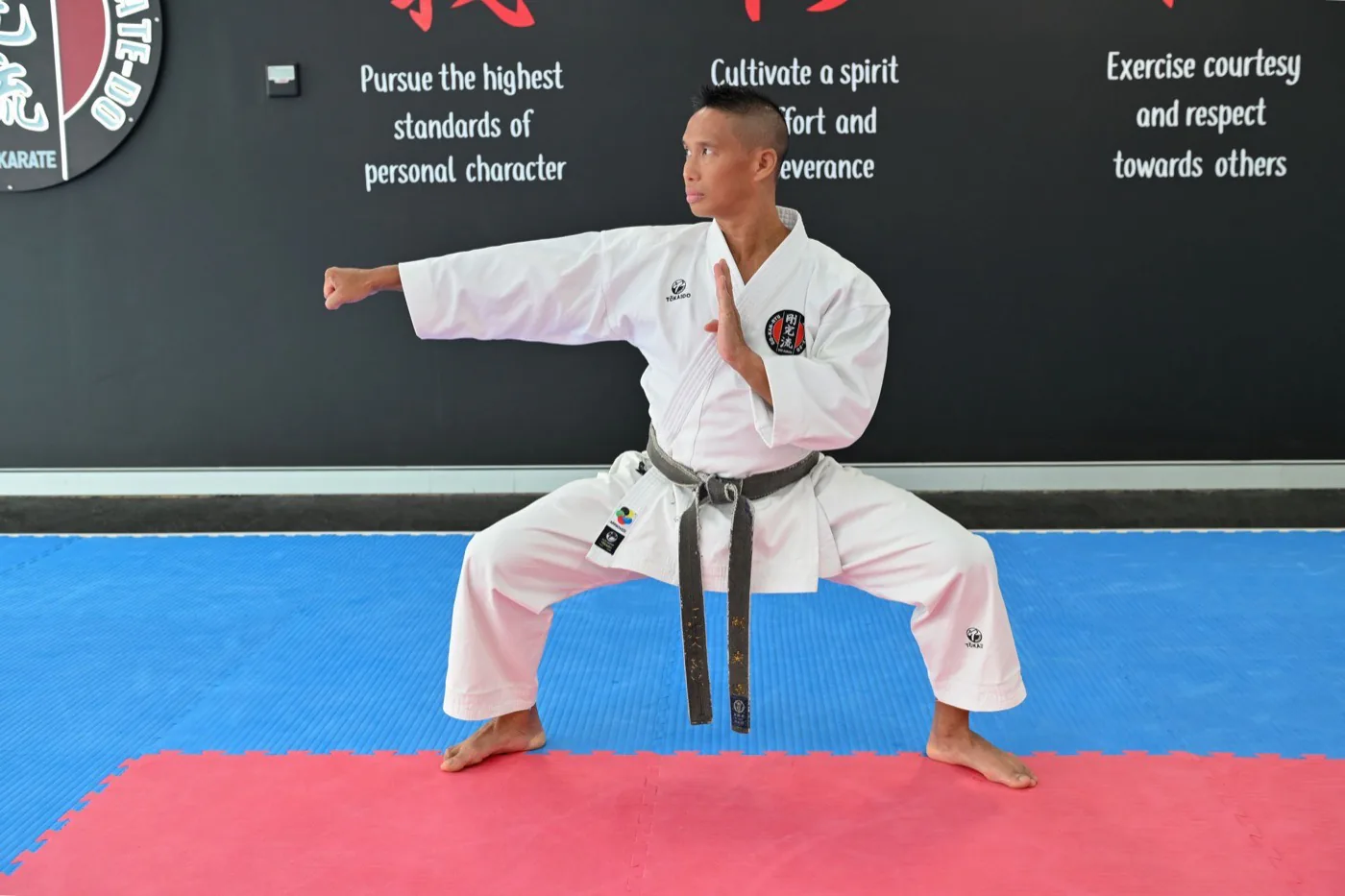
- The Yoko tsuki (side punch) lands simultaneously with the Shiko dachi.
- The right hand executes Yoko tsuki, and it finishes at shoulder height
- Hikite is open at the solar plexus (similar to Kake uke)
- This technique occurs twice in succession. The first is fast with a Kiai, the second is fast (without a Kiai).
- Count 23 is very similar however it is performed slow and uses a traditional Hikite.
Counts 28 and 29: Oliva Uke
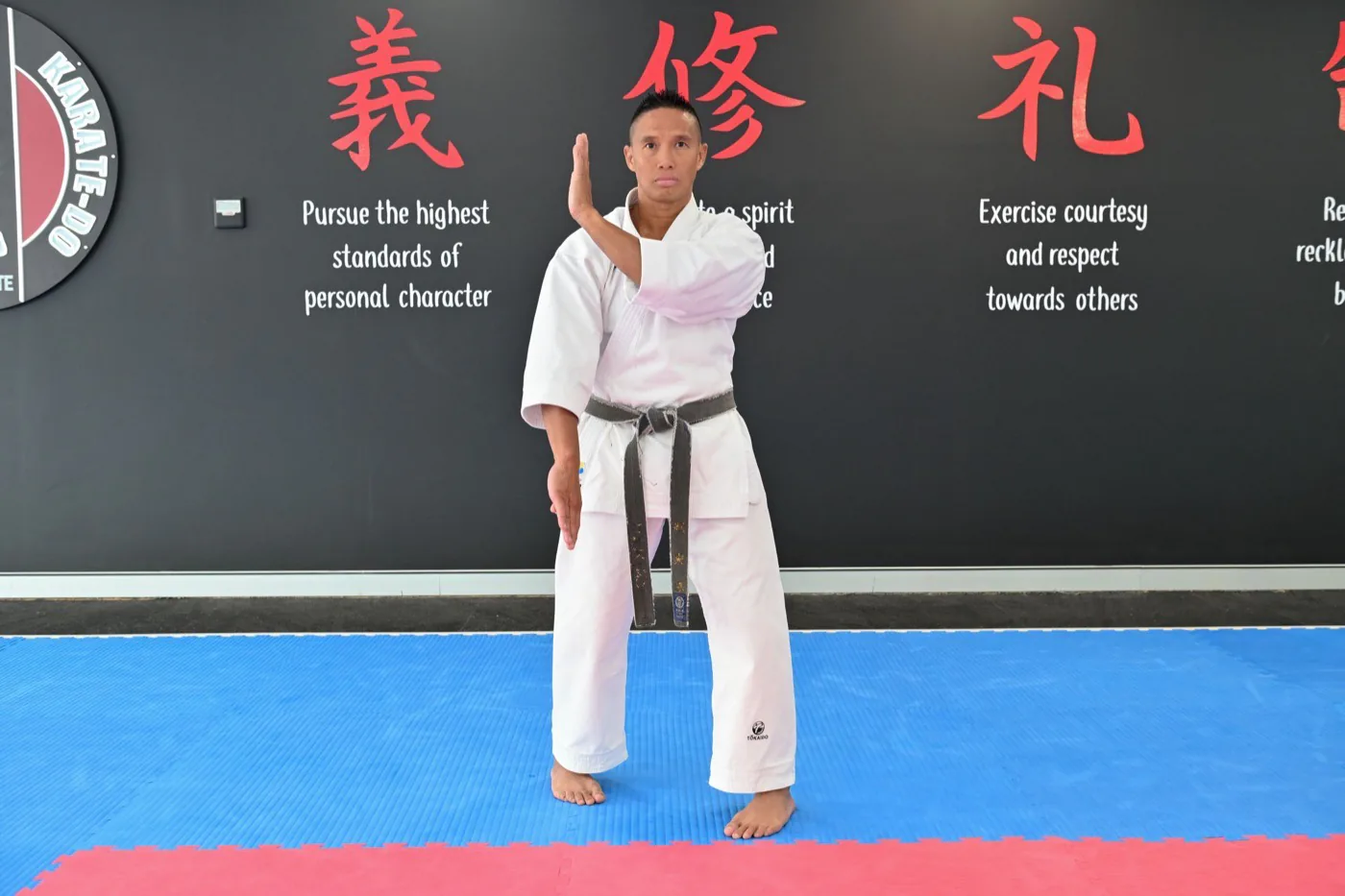
- Oliva uke (Antonio Oliva block-style) lands as the Sanchin dachi finalises.
- Both palms are pointed out (away from the body)
- The upper hand is head level and leads with the palm (fingers up)
- The upper hand is over the opposite shoulder
- The lower arm is covering the entire side of the torso and almost straight
- Oliva Uke occurs twice, once with each side of the body